
When Uncertainty Becomes a Way of Life
August 10, 2026 | Written By: Dr. Erlange Elisme, DSW
There is a difference between facing a difficult season and living in uncertainty for so long that it begins to feel normal.
Many Haitian families know this feeling well. One day it is concern for loved ones in Port-au-Prince or the provinces. The next day it is worry about work, housing, rising prices, or whether family members are safe. Before one concern settles, another appears. Even joyful moments can carry an undercurrent of waiting for the next phone call or the next piece of difficult news.
For years that waiting had a cushion, thin as it was. On July 27, 2026, the cushion was removed. Temporary Protected Status (TPS) for Haiti ended, and more than 300,000 people lost the ability to live and work here legally. Work authorization that was valid one week was no longer valid the next. For families who built years of ordinary life around that status, a question that stayed open for a long time closed in the hardest direction.
Two answers from the same government
The Department of Homeland Security (DHS) determined that Haiti no longer meets the conditions required for Temporary Protected Status.
At the same time, the U.S. Department of State keeps Haiti at a Level 4 advisory, its highest, telling Americans not to travel there for any reason. The advisory names kidnapping, violent crime, terrorist activity, civil unrest, and limited health care. Haiti has been under a state of emergency since March 2024. The Federal Aviation Administration (FAA) does not permit U.S. commercial flights into Port-au-Prince. American government employees stationed in Haiti are restricted from non-essential travel outside the embassy.
One arm of the government calls the country too dangerous for Americans to enter. Another has determined it is suitable for Haitians to be returned to. Both statements are current. Both are official.
If you have been carrying that contradiction and finding it heavy, your reasoning is sound. The confusion is not yours to resolve. It sits inside the policy itself.
Before anything else, get accurate information
This column offers educational support, not legal guidance, and I am not an immigration attorney. If your status is affected, speak with a licensed immigration attorney or a representative accredited by the Department of Justice Executive Office for Immigration Review (EOIR) through a recognized nonprofit.
Do not assume every door has closed. Some people may qualify for other paths, including family-based petitions, asylum, U visas, or cancellation of removal. An attorney can tell you which questions apply to your household.
A few practical facts are worth knowing. Employment Authorization Documents issued under Haiti's TPS designation are no longer valid, and employers are required to reverify. If you hold work authorization through another status, you can present that documentation. And for those without an existing removal order, deportation generally requires appearing before an immigration judge first. Knowing the actual sequence of events is not the same as safety, but it is better than filling the silence with the worst version.
Be careful with anyone who guarantees an outcome for a fee. Seasons like this one bring out people who profit from fear, including notarios who are not authorized to give legal advice. A reputable attorney will tell you plainly what is uncertain. Bring a trusted person with you to the appointment, because complex information is difficult to absorb while your heart is racing.
What long uncertainty does to the body
Living in legal limbo affects more than our thoughts. It affects our physiology.
The nervous system is built for short bursts of danger, not years of it. When stress continues without resolution, the brain begins treating every unknown as an active threat. You may notice that concentrating at work takes twice the effort it used to. Your patience runs thin. You wake up exhausted after a full night of sleep. You forget routine things, startle easily, or replay a conversation long after it ended.
Your body is responding logically to what it has been asked to carry. When there is never a chance to fully exhale, it stays braced for impact.
Many people expect that once an answer arrives, even a hard one, relief will follow. What often comes instead is a second wave. The waiting is over and the worrying is not, because a new set of unknowns takes its place.
Sponsored Ad

The moments no one sees
The parent checking headlines before getting out of bed, hoping nothing escalated overnight.
The worker trying to shape a sentence for a supervisor before finishing the work of absorbing it.
The teenager at the kitchen table translating a notice, understanding its weight before the adults do, deciding in that moment how much to say out loud.
The mother smiling through dinner after an afternoon spent sending money to relatives in danger.
The father answering every check-in with “I’m fine,” not because he is, but because he believes the household needs him to be the pillar.
These moments place a steady demand on the body, and they rarely get named as work.
What you are allowed to feel
Grief belongs here. So does anger. Being expected to return to a place your host country warns its own citizens to avoid is an injustice, and naming it as one is accurate rather than dramatic. That anger does not need to be sanitized before it is allowed to exist.
Fear and determination can occupy the same day. Faith and frustration can live in the same prayer. Holding more than one truth at once is what people do when the situation itself contains more than one truth.
Nothing about your emotional response needs correcting.
When school starts again
Children and teenagers in affected households carry an invisible workload into the classroom. Worry about coming home to an empty house, or absorbing the tension of adults who are barely holding steady, does not usually announce itself as worry. It shows up as irritability, stomachaches, slipping grades, or a sudden refusal to leave a parent at drop-off. Young people often protect the adults they love by saying nothing, which means the first sign a family sees may be a note from a teacher.
A few things help. Children manage better when the worry has edges. Sit with a young person and separate what belongs to school, meaning homework, friends, practice, and tests, from what belongs to the household and the news. Naming which is which, out loud or on paper, keeps the larger fear from flooding a math test.
Predictability lowers the volume of dread. A short scheduled check-in during the day, even a few words at lunch, means a child is not sitting through fifth period wondering whether something happened at home. In the same spirit, a family plan should be known rather than hidden. Children who know who will pick them up, who to call, and where the phone numbers are written down carry less than children left to imagine. Secrecy does not protect young people. It leaves them guarding a fear they cannot name.
Give them something to do with their bodies when the fear rises in the middle of class. Slow breathing works, and so does tracing the edge of a notebook, or pressing both feet flat into the floor and noticing the pressure. These are small, private, and repeatable, which is exactly what a classroom requires.
Where it is safe to do so, tell a school counselor or social worker what your family is facing. A quiet arrangement, a pass to step out without explaining in front of classmates, can make the difference between a student staying in school and a student disappearing from it.
An anchor does not stop the waves
One practice I return to often is the A.N.C.H.O.R.™ Framework, a set of trauma-informed grounding practices developed through my work at Elisme Consulting Services LLC. An anchor does not stop the waves. It keeps the boat from drifting while the water is rough. The six practices are awareness, nurturing the body, connecting with your emotions, holding space for mixed emotions, opening to support, and resting and resetting.
In a week like this one, each of them can be very small. Notice that your shoulders have been near your ears since morning, and let them drop. Sit down to drink a glass of water instead of rushing through the kitchen. Name what you feel without judging it, even if the only word available is heavy. Let worry for tomorrow and presence for today occupy the same hour without deciding one cancels the other. Say one honest sentence to someone you trust instead of the polished version. Put the phone down for a quarter of an hour and take three complete breaths before the next form, the next call, the next decision.
None of this changes a federal policy. It restores enough steadiness to think clearly, and clear thinking is what this season will ask of you again and again.

Men anpil, chay pa lou
Many hands make the load lighter. This is the ethos of kombit, the Haitian practice of collective labor, of carrying together what no one should carry alone. Our people have come through severe storms by this method before. We are not starting from nothing.
Make it practical now. Check on the households that have gone quiet. Offer a ride to a legal appointment. Sit beside a neighbor while they make a difficult phone call. Keep a child's routine and a child's joy steady while the adults around them are shaken. If you are the one who is always strong for everyone else, let someone carry something for you this time.
Community care does not erase what has been decided. It changes how the weight is distributed, and a nervous system held by other people responds differently than one left alone.
What hope asks of us now
The days ahead hold questions no one can answer today. The uncertainty is real, and so is the grief that comes with a decision like this one.
Equally real is our capacity to care for one another, to adapt, and to keep building meaningful lives while the ground is still moving. Our community has done difficult things before. We are still here, still organizing, still feeding each other, still standing together.
Hope is not pretending everything is fine. Hope is a discipline: choosing, one day at a time, to stay grounded and connected while the future is still unfolding.
About the Author
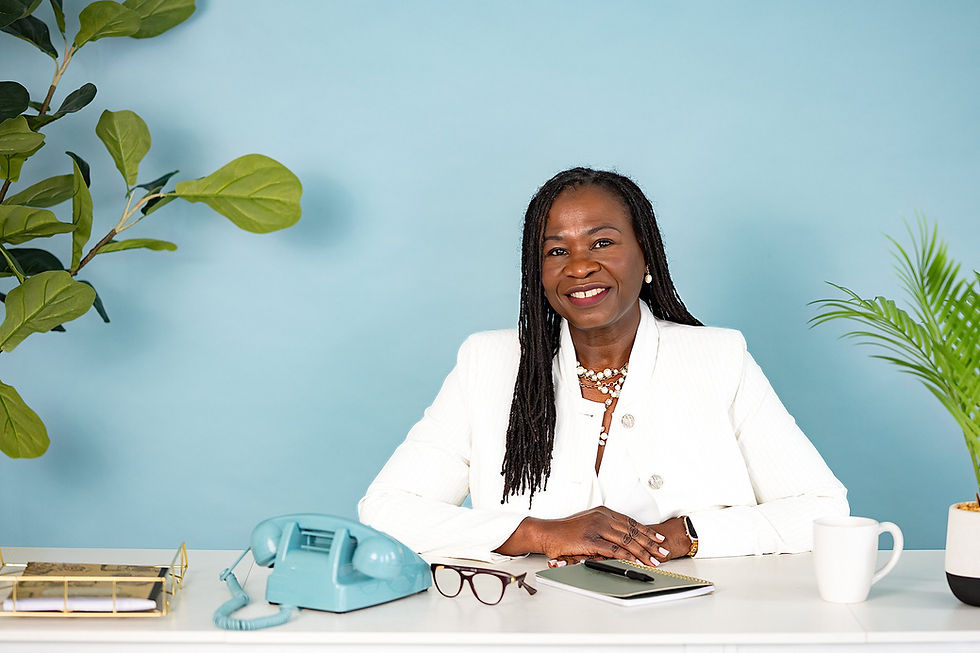
Dr. Erlange Elisme is a trauma-informed care leadership and practice specialist with over 30 years of experience as a school social worker. As Founder and CEO of Elisme Consulting Services LLC, she provides training and consulting to organizations committed to healing-centered practices. Dr. Elisme holds certification in Global Mental Health: Trauma and Recovery from Harvard Medical School, and has completed advanced continuing education in Trauma-Informed Care, Immigrant Mental Health, and Motivational Interviewing. She is a published author, host of the "Resilient Voices" podcast (available in English and Haitian Creole), and a 2025 Gwinnett Chamber Business Excellence Awards finalist. Fluent in English, French, and Haitian Creole, Dr. Elisme brings both clinical expertise and cultural wisdom to her work of restoring resilience in individuals and communities.

Dr.Erlange Elisme, DSW
CEO / Owner & Author
Website:https://elismeconsultingservices.com
Phone number:678-595-6446


Comments