
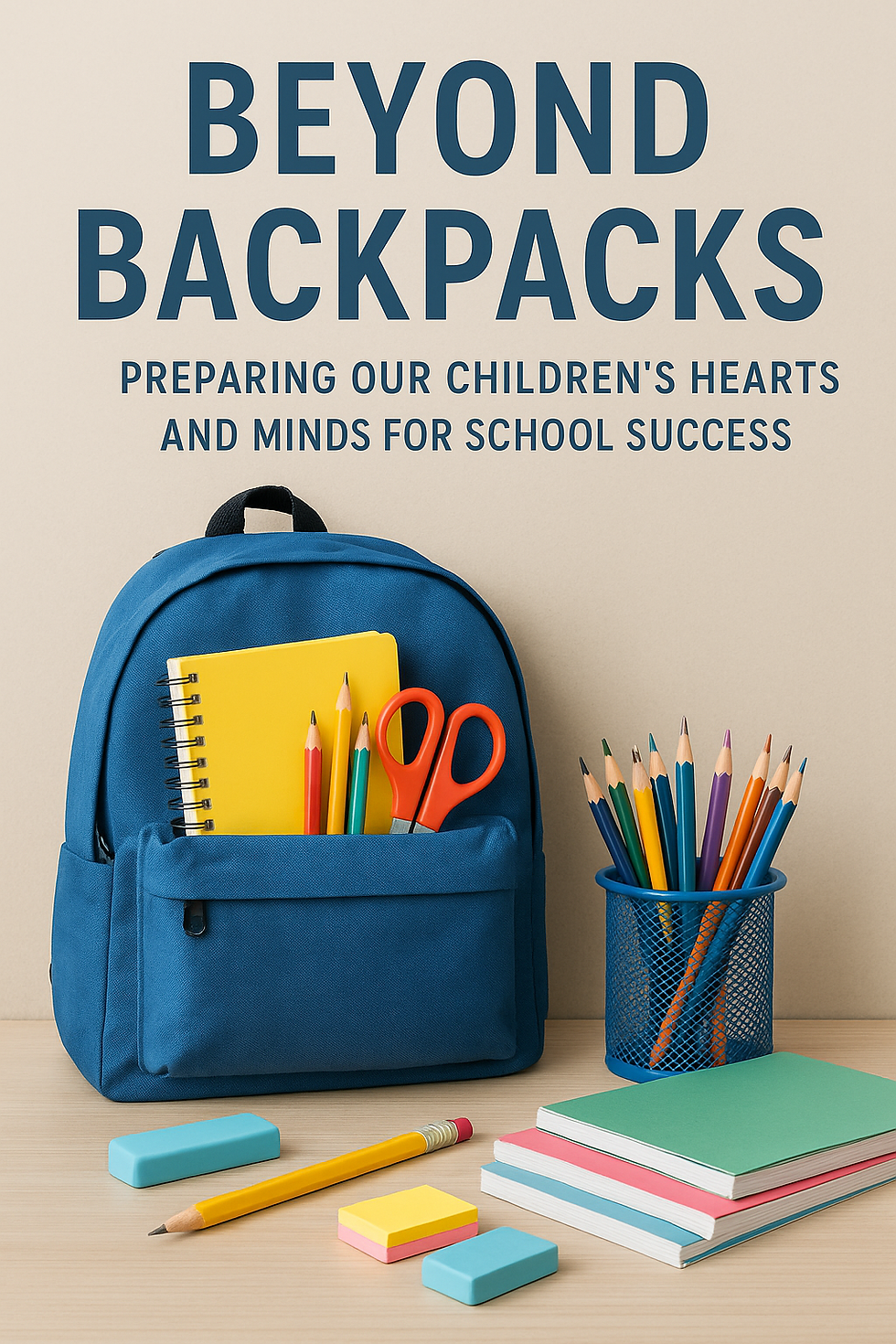
Beyond Backpacks: Preparing Our Children's Hearts and Minds for School Success

Fostering Resilience in the Haitian Community as We Navigate Another School Year
As August approaches and store aisles fill with notebooks, crayons, and uniforms, families across Georgia's Haitian community engage in the familiar ritual of school preparation. Some families prepare to send their eldest to college dormitories, while others select crayons for a kindergartener's first classroom experience. Yet regardless of grade level or academic performance, what we all must do as parents remains the same: we must equip our children emotionally to stand firm in any environment they enter.
Beyond the essential supplies and new shoes lies a deeper conversation; one that honors our cultural wisdom while addressing the social-emotional foundations that enable our children not merely to survive, but to thrive as confident representatives of our collective strength. This preparation goes beyond academic readiness; it centers on cultivating the internal resilience that allows our young people to navigate challenges with dignity and purpose.
The Art of Emotional Preparation
Our ancestors understood what modern research now confirms: a child's emotional readiness matters as much as their academic preparation. In Haiti, we say "Kè kontan se remèd kò"—a happy heart is the body's remedy. This wisdom extends to learning, where emotional security creates the foundation for academic success.
As parents, we carry the profound responsibility of nurturing not just our children's minds, but their spirits. This preparation begins in the quiet moments at home, in the conversations we have while folding new school clothes, and in the stories we share that connect our children to their heritage and their limitless potential.
In environments where our children often face subtle exclusions or overt bias, cultivating joy is a revolutionary act. Joy isn't a distraction from resilience; it's the fuel. Make room for dance breaks, silly games, and music that reminds them where they come from. A joyful child is a confident child.
When we center joy in our homes, we teach our children that their happiness matters, that they deserve spaces of celebration even amid challenge. This joy becomes portable armor—something they carry into classrooms, playgrounds, and eventually workplaces. It reminds them that their presence is a gift, not a burden to be tolerated.
Sponsored Ad

Building Resilience Through Cultural Connection
Our community has faced unprecedented challenges—from natural disasters in our homeland to economic uncertainties and social pressures here in Georgia. These experiences, while difficult, have also cultivated remarkable resilience. Now, we must intentionally pass this strength to our children.
Honoring Our Story: Share age-appropriate stories of family perseverance. When children understand they come from people who have overcome obstacles, they develop an internal narrative of strength. These stories become emotional anchors during challenging school moments.
Language as Power: Whether your family speaks Kreyòl, French, or English, celebrate multilingualism as a superpower. Children who see their cultural identity as an asset approach school with confidence rather than shame.
Community as Extended Family: Remind your children that they represent not just themselves, but a legacy of dreamers and achievers. This collective identity provides both motivation and support.
Practical Steps for Social-Emotional School Readiness
Create Transition Rituals: Develop simple routines that help children process change. This might be a special breakfast on the first day or a family blessing over new school supplies—rituals that ground children in love and intention.
Practice Emotional Vocabulary: Teach children to name their feelings. "I notice you're feeling nervous about meeting new friends. That's normal and shows you care about doing well." When children can put words to their emotions, they have a tool they'll use their whole lives for speaking up for themselves and building good relationships.
Establish Safe Spaces for Expression: Designate regular times for children to share their worries, excitement, and questions about school. These conversations build trust and teach children that their inner world matters.
Model Resilient Thinking: When discussing challenges, demonstrate how to reframe difficulties as growth opportunities. "This might be hard, but I believe in your ability to figure it out, and I'm here to support you."
Building Inner Strength
We cannot shield our children from all difficulties—nor should we. Instead, we prepare them to handle challenges with grace and wisdom. This means helping them develop:
Emotional Regulation Skills: Teach simple breathing techniques, counting strategies, or physical movements that help manage overwhelming feelings. Practice these when children are calm so they're available during stress.
Problem-Solving Confidence: Encourage children to generate solutions rather than immediately solving problems for them. "What do you think might help in this situation?" This builds confidence in their own abilities to figure things out. Whether they're dealing with a difficult homework assignment or a disagreement with a friend, children who trust their own thinking approach challenges differently.
Relationship Skills: Role-play various social scenarios—making friends, handling conflicts, asking for help. When children practice these situations at home, they can face real interactions with courage and resilience. Try this: during dinner, ask "What would you do if someone at lunch said your food smells weird?" or "How would you ask the teacher for help if you don't understand the math?" These conversations prepare them for real moments.
Cultural Pride: Equip children with positive responses to questions about their heritage. Help them see their unique background as enriching their school community rather than something to hide. Practice responses together: "I'm Haitian-American, and we speak three languages in my family!" or "My family is from Haiti—it's a beautiful country that was the first Black republic in the world." When children have proud, confident answers ready, they share their heritage as a gift rather than hiding it.
The Ripple Effect
When we invest in our children's emotional readiness, we strengthen the entire community. Each child who enters school with confidence becomes an ambassador for our values. They show their teachers and classmates what resilience looks like, what multilingual brilliance sounds like, what cultural pride feels like.
Our children carry forward not just academic aspirations, but the unshakeable knowledge that they belong, that they matter, and that they come from people who never surrendered their dreams.
Moving Forward Together
This August, as you help your child select their first-day outfit, remember that you're also dressing their spirit for success. The conversations you have, the confidence you instill, and the cultural pride you nurture will serve them far beyond any single school year.
Our children are not just students—they are the living continuation of our community's story, equipped with both ancestral wisdom and contemporary tools for success.
So here's what I want you to remember as you stand in that school supply aisle: the most important thing you can pack in their backpack isn't found in any store. It's the voice in their head that says "I belong here. I am worthy. I come from greatness." That voice—your voice—will carry them through every classroom, every challenge, every triumph ahead.
Travay ansanm fè nou pi fò—working together makes us stronger.
© 2025 Erlange Elisme, DSW, Owner of Elisme Consulting Services LLC. All rights reserved. This article may be shared and distributed for educational and community purposes with proper attribution.
July 11, 2025 | Written By: Dr. Erlange Elisme

Dr.Erlange Elisme, DSW
CEO / Owner & Author
Website:https://elismeconsultingservices.com
Phone number:678-595-6446


Comments